

Growing Wellness at the Farmers Market
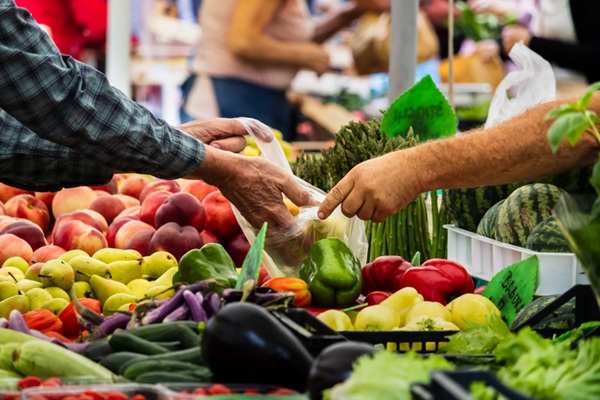

I recently attended a farmers market for the first time this season and was reminded just how vital these spaces are to our local communities. The experience also reminded me of how many delicious, healthy food options are available in my own neighborhood that I've been ignoring for the past few months, and it revitalized my interest in cooking with seasonal fruits and vegetables. If one trip to the farmers market could do that for me, what impact could it have on incentivized employees?
What Is a Farmers Market?
On the surface, a farmers market is simply a public market where local farmers, growers, and food producers sell their goods and products directly to shoppers. But, as anyone who routinely visits their local farmers market will tell you, they are so much more than that. These markets serve as an important third space where people of all ages gather to socialize, shop, and engage with the community. While farmers markets may be traditionally thought of as spaces for white, wealthy people with the income to spend on artisanal products, there are organizations and initiatives across the country working to change that narrative and get more people eating healthy, locally grown food.
Market Perks
The Southeast Wisconsin Farmers Market Collaborative (SWFMC) has begun a new initiative, called Market Perks, wherein vouchers are created for businesses and organizations to distribute for use at local farmers markets. The goal is to help expand equitable access to fresh, healthy food while strengthening both the community and regional economy.
Each five-dollar voucher can be distributed to employees as part of the organizational wellness initiative, as an incentive, or as a thank-you gesture. Employees then exchange vouchers for goods at their favorite participating market. The employer is only invoiced for redeemed vouchers, and 100% of the revenue goes directly back to local Wisconsin farmers. Each voucher has a serial number to easily track participation.
Many farmers markets accept payments from financial assistance initiatives—including the Supplemental Nutrition Assistance Program (SNAP); the Special Supplemental Nutrition Program for Women, Infants, and Children (WIC); and senior programs. Market Perks can be used by anyone and can act as an additional supplement for those experiencing food insecurity or financial hardship, allowing them to further stretch their dollar while getting access to fresh, healthy produce.
Bumper Crop and Harvest Bucks
The Maine Federation of Farmers' Markets (MFFM) offers a similar initiative, called Bumper Crop. These are gift vouchers (often provided by employers to employees) for purchasing fresh, local food at farmers' markets.
MFFM takes it one step further with Maine Harvest Bucks (MHB). This is a nutrition incentive program for those using SNAP benefits at farmers markets. They can get healthy foods at no extra cost while helping local farmers grow their businesses. When SNAP benefits are spent at participating markets, MHB vouchers are offered as bonuses to be redeemed for additional local produce at the market. Each market matches spend 50% on the dollar.
In 2021 and 2022, more than $1,200,000 in combined SNAP and MHB benefits was spent at farmers markets in Maine, allowing more than 6,000 households to access healthy food directly from local farms.
Weekend Wellness
Farmers markets offer tons of wellness benefits for individuals and local communities.
- Accessible nutrition: Food is medicine, and local markets bring healthy, fresh, sustainably grown foods directly into the community.
- Social connection: Food connects us all; at farmers markets, natural conversations begin about food, allowing neighbors to share tips and tricks and cultural dishes, as well as build supportive, mutually beneficial relationships that you cannot get at big-box grocery stores. Often times, markets will have additional activities for children and families, live music, and art on display to enhance the experience.
- Physical activity: Markets provide built-in movement as you navigate through each stand, often attract runners and cyclists, and encourage time outdoors.
- Presence in nature: Farmers markets are typically held outdoors in parks, allowing ample time for mindfulness and boosting mood.
- Sense of purpose: Weekly attendance at markets can provide a valuable routine for individuals and often lends a strong sense of purpose and fulfillment for shoppers. Their dollars support local farmers and small businesses, improve individual health, and help to preserve farmlands.
Farmers markets, paired with wellness initiatives like those offered by SWFMC and MFFM, bring communities together while creating equitable access to fresh food. These programs pose a unique opportunity to support local businesses while providing employees with access and incentives for healthy food options, improving wellness on all fronts.
Additional Resources
About the Contributor
Categories
- Belonging (7)
- Benchmarks (14)
- Benefits (11)
- Cancer (5)
- Culture (44)
- Emotional Wellness (31)
- Healthy Workplaces (36)
- Intellectual Wellness (15)
- Legal and Compliance (10)
- Mental Health (26)
- Occupational Wellness (30)
- Physical Wellness (29)
- Social Wellness (16)
- Spiritual Wellness (5)
- Truth vs. Trend (4)
- Wellness Alliance Events (17)
- Wellness Initiatives (39)
- Workplace Wellness (36)