
Volunteer Programs Change and Grow for Deeper Impact

This blog was originally published on Word on Benefits.
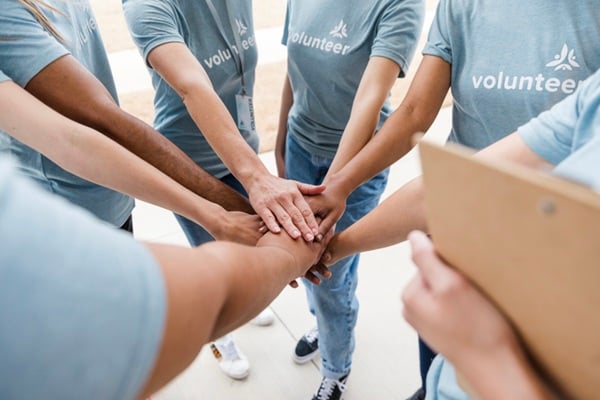
Whether it’s folding origami flowers for a hospice organization, weaving mats for people without housing or reviewing youth scholarship applications online, employee volunteer activities have evolved to fit employee interests and schedules.
“There is more flexibility, and there are different ways of volunteering,” said Kimberly O’Donnell, chief fundraising officer for Bonterra, a social good software company.
Employee volunteer programs can still mean staffing a charity run or cleaning up a park, but employees can also volunteer remotely through online activities or participate in “micro” volunteer tasks—15- to 30-minute activities they can complete during their lunch hours and break times.
“It’s really about creating a volunteer program that feels personal and visible and easy to do, and they don’t feel bureaucratic or forced,” O’Donnell explained.
About 30% of corporate and public employer organizations offer paid leave time for volunteering or community service, according to the International Foundation’s 2026 Employee Benefits Survey.
Growing Interest in Giving Back
“There is an increased desire to make that connection to community, and we see many organizations that either want to establish a volunteer program or giving program or just broaden it,” O’Donnell said. She tied some of the increase to the feeling of disconnection that many felt during the COVID-19 pandemic.
Younger generations also are driving the growth, she noted: “They want their work to have meaning and purpose, and they are asking their companies to be part of that larger community so they can feel good about working for those companies and then also about the volunteer and the community building that they do themselves.”
Both employers and employees reap value from volunteering. For employers, programs can serve as an attraction tool, O’Donnell said. “You’re showing that you are a purpose-driven organization.” Such programs can also enhance workplace culture by bringing together employees who might not normally
interact together and help build employees’ skills and leadership potential.
For employees, “volunteering is linked to greater employee connection, reduced stress and increased mental wellness. It just helps contribute to a healthy lifestyle,” O’Donnell added.
What to Think About
O’Donnell offered the following considerations for employers that want to start or expand a volunteer program.
- Location: Think about where to establish or grow the program.
- Employee interests: It’s best to survey employees and see where their interests lie. That also helps employers determine their own corporate pillars and how to tie their industry and brand to the causes they support.
- Flexibility: “Not everyone can go and volunteer at noon on a Tuesday,” O’Donnell said. Having different types of activities allows more people to participate.
- Type: Consider whether the activity will be more skills based or a social opportunity.
- Integration with culture and strategy: Is the goal to foster team building and sense of community or provide stress relief?
- Measuring impact: This can be done by tracking inputs (e.g., volunteer hours, planning time, cost of supplies), outputs (e.g., backpacks stuffed, food boxes packed) and outcomes (e.g., how many kids received backpacks). That information can be included in corporate responsibility reports.
- Leadership visibility: “Having leadership visibility is crucial. It will be hard for employees to feel good about volunteering when they’re manager is not encouraging or accepting,” O’Donnell cautioned.
- Pay: Should employees receive paid time off to volunteer?
Small Projects, Big Results
O’Donnell points to the mat-weaving project—operated by a bank branch that she’s familiar with—as an example of how a small, uncomplicated activity can generate multiple benefits. “All the employees at that branch are able to build and weave this mat together, which I think is an amazing example of team building—that sense of community and giving back that’s so powerful—and also having something available as a stress reliever. There’s so much good that is literally woven into those mats.
April 2nd is National Employee Benefits Day! The 2026 theme is Caring in Action: Strengthening Communities Through Organizational Volunteer Initiatives. Visit www.ifebp.org/BenefitsDay for more resources and data on the organizational impacts of giving back.
About the Contributor
Categories
- Belonging (7)
- Benchmarks (13)
- Benefits (10)
- Cancer (5)
- Culture (42)
- Emotional Wellness (30)
- Healthy Workplaces (34)
- Intellectual Wellness (15)
- Legal and Compliance (10)
- Mental Health (24)
- Occupational Wellness (30)
- Physical Wellness (28)
- Social Wellness (16)
- Spiritual Wellness (5)
- Truth vs. Trend (4)
- Wellness Alliance Events (17)
- Wellness Initiatives (37)
- Workplace Wellness (33)