

Understanding the 2025-2030 Dietary Guidelines


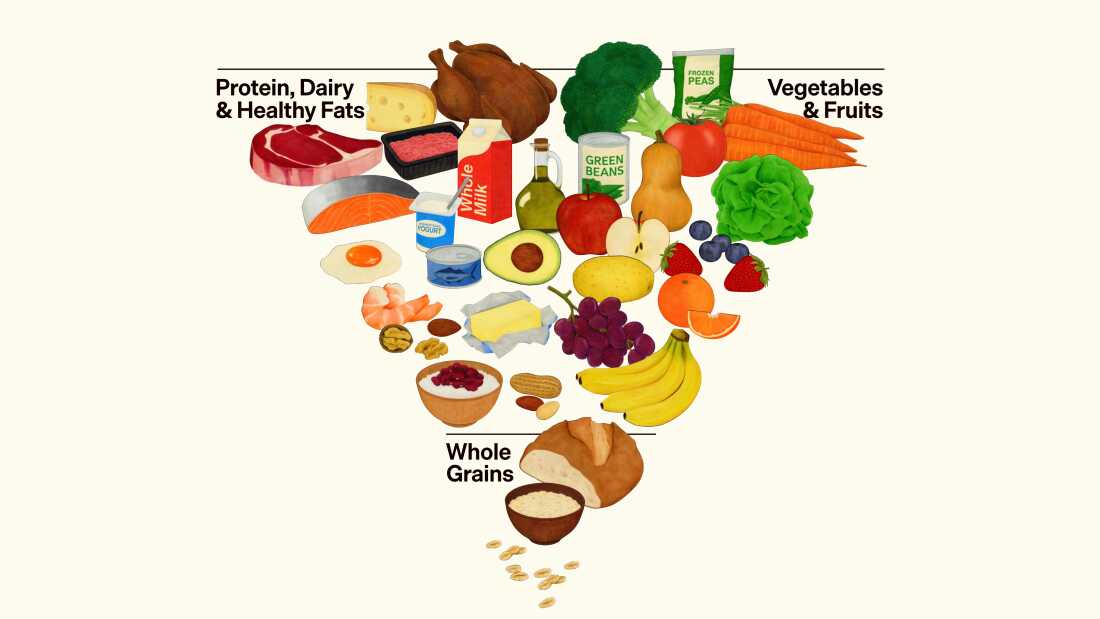
The Dietary Guidelines for Americans, 2025–2030 was recently released, and the recommendations emphasize whole, nutrient-dense foods, including protein, dairy, vegetables, healthy fats, and whole grains, and use an inverted pyramid as a visual framework. The guidelines also encourage reducing highly processed foods that contain refined carbohydrates, added sugars, excess sodium, unhealthy fats, and chemical additives. In addition, they remind individuals to eat the appropriate amount of food based on age, sex, height, weight, and physical activity level. One of the overarching goals of the new guidelines is to address the rising rates of chronic disease, obesity, and metabolic risk. While organizations such as the American Heart Association (AHA) and the Academy of Nutrition and Dietetics support many of the recommendations, they have also identified areas where careful interpretation is needed and where more education may be helpful. Because these guidelines inform food choices, nutrition education, and food environments across multiple settings, their impact extends far beyond individual diets, making them important to understand.
Areas of Broad Agreement
According to several sources, including NPR, many experts and organizations agree that many of the recommendations in the guidelines align with well-established nutrition science. Below is a breakdown of areas where support is generally consistent.
- Whole foods: The guidelines emphasize eating more whole foods, including fruits, vegetables, and fiber-rich whole grains, while reducing the amount of highly processed foods that contain refined carbohydrates, added sugars, excess sodium, unhealthy fats, and chemical additives. This generally aligns with recommendations from the AHA, the Academy of Nutrition and Dietetics, and other experts in the field.
- Added sugars: The guidelines state that no amount of added sugars, nonnutritive sweeteners, or sugar substitutes is recommended as part of a healthy diet. Additionally, if added sugars are consumed, they should be limited to no more than ten grams per meal. While there is broad support for limiting added sugars, there is some disagreement about how sugar sweeteners and substitutes fit into a healthy eating plan.
- Saturated fat: The guidelines maintain the recommendation to limit saturated fat to no more than 10% of total daily calories, consistent with previous guidance and supported by experts and organizations across the industry.
- Dairy: NPR notes that research supports healthy eating patterns that incorporate dairy foods such as milk, cheese, and yogurt, which have been associated with lower cardiovascular risk. While there is some debate about full-fat versus low-fat or fat-free options, dairy is generally considered part of a healthy diet.
Opportunities for Clearer Explanation and Education
- Protein: While protein is widely recognized as part of a healthy eating pattern, the AHA urges more research on both the recommended protein intake per day and the most beneficial sources for optimal health. The AHA encourages prioritizing plant-based proteins, seafood, and lean meats over red meat, while the new guidelines do not stray as much away from red meat consumption. The Academy of Nutrition and Dietetics notes that the emphasis on animal sources of protein could make it more challenging to stay within the recommendation of limiting saturated fat to no more than 10% of total daily calories.
- Dairy: The AHA identifies an opportunity for additional education and clearer guidance for individuals who cannot consume dairy products due to dietary restrictions, as this population is not directly addressed in the guidelines. In addition, the AHA promotes low-fat and fat-free options as a key part of heart-healthy nutrition.
- Fat: In addition to the recommendation around red meat and dairy, the guidelines also encourage the use of butter and beef tallow for cooking, which could lead to greater difficulty staying within the recommended guidelines for saturated fat, according to both the AHA and the Academy of Nutrition and Dietetics. While the new guidelines recommend using olive oil, too, the AHA more broadly points to a range of nontropical vegetable oils as “better for you,” with olive oil among them.
- Sweeteners and sugar substitutes: While the Academy of Nutrition and Dietetics supports limiting added sugars, it notes that current research generally considers low- and no-calorie, nonnutritive sweeteners and substitutes safe when consumed in moderation.
- Salt seasoning: The guidelines recommend that consumers flavor food with salt, spices, and herbs. The AHA cautions that without proper education, this recommendation could lead to individuals exceeding the recommended limits for sodium intake.
- Visual guidance: Visual tools resonate with many consumers, and while the new pyramid graphic places vegetables and fruits at the top, it features red meat and dairy distinctly at the top, as well. Whole grains appear at the very bottom, and plant-based food sources are less visually noticeable. Experts stress the importance of education around the visual, as many individuals may rely on the graphic alone and will likely not read the written guidelines that provide context and detail.
- Alcohol: A notable difference in the guidelines involves alcohol recommendations, which no longer include specific daily limits. The guidelines advise certain groups—including pregnant women, those recovering from alcohol use disorder or who are unable to control their intake, and people taking medications or managing medical conditions that interact with alcohol—to avoid drinking. For others, the guidance encourages consuming less alcohol for better health. For overall well-being and heart health, the AHA recommends that individuals who do not drink alcohol not start, and that those who choose to drink do so in moderation, with specific guidance on daily limits.
Applying the Guidelines
Many experts view the new food pyramid graphic and guidelines as a step in the right direction. At the same time, they also urge ongoing research and consumer education. When applying these recommendations in worksite wellness or other health promotion initiatives, consider referencing them as a framework, rather than a rigid way of eating.
Here are a few strategies to consider.
- Rely on evidence-informed education: Provide guidance that is based on current nutrition science when educating those you serve.
- Provide clear guidance and education: With the specific needs of your population in mind, focus on providing clear, easy-to-understand information.
- Create supportive environments: Focus on making the healthy choice the easy choice through accessible food options, appropriate labeling, and organizational policies.
- Empower individual choice: Encourage individuals to make choices that align with their goals and health needs in a safe, effective way.
Resource:
About the Contributor
Categories
- Belonging (7)
- Benchmarks (12)
- Benefits (8)
- Cancer (4)
- Culture (38)
- Emotional Wellness (27)
- Healthy Workplaces (31)
- Intellectual Wellness (15)
- Legal and Compliance (10)
- Mental Health (22)
- Occupational Wellness (29)
- Physical Wellness (25)
- Social Wellness (15)
- Spiritual Wellness (5)
- Truth vs. Trend (4)
- Wellness Alliance Events (16)
- Wellness Initiatives (34)
- Workplace Wellness (32)